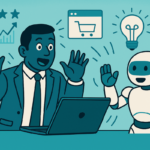

“AI can draft, or edit, but it can’t do both.” This is the best summary I’ve heard of large language models so far, and struck me as simple and profound. My brother uttered this phrase at a recent small family gathering, where we had gathered to celebrate my father’s remarriage to his second wife (Yes, I know. She’s a lovely lady and never stopped being my stepmom). This phrase about drafting and editing struck me, and made me think of the biggest large language models: ChatGPT, Claude, and Copilot. I’ve also recently been piloting the supply-chain specific AI Sensei from SCMDOJO. How are these tools different, what use do they have, and how can supply chain professionals maximize their use without falling into their traps? Let’s talk about AI tools today: their “personalities,” strengths and weaknesses, and applications for procurement professionals. (I say procurement professionals because that’s the part of the supply chain I’m going to focus on. There are certainly applications to logistics and warehousing, but my expertise fits procurement best.)
Draft or Edit
Before I launch into the tools, let’s unpack this first statement a little. AI can draft, or AI can edit, but it can’t do both…yet. When I say AI in today’s article, I’m generally referring to large language models, even though AI is a much broader category. At this point, they can’t draft and edit well, although that may still come soon.
Drafting means starting with a blank sheet of paper, and asking AI to create something from nothing. In day-to-day procurement, drafting using AI means creating scopes of work or writing difficult emails. Editing means putting in an item drafted by a human (that is likely rough at best) and asking the AI to edit, polish, or help change tone or phrasing. In day-to-day procurement, editing using AI means cleaning up old scopes of work, doing a “witch check” on an email written in anger or frustration, or analyzing spend data.
It’s been said many times in many ways, but the key to using AI to draft or edit is still the human factor. If you put something into AI and then have AI edit it, you will get garbage as a result. AI is not foolproof, and still makes lots of errors. If you ask AI to give you an e-auction strategy for a bid, chances are extremely high AI will get it confidently wrong. Even if you draft in one AI and edit in another, you are likely to still have a lot of errors even beginning professionals would not make. So use AI to draft or edit, but not both.
A caution you probably already know: do not put company names or confidential data into public AI engines. We are only beginning to explore that space, but consider anything you put into non-proprietary AI engines to be the same as publishing it in the newspaper or on a public blog.
ChatGPT
ChatGPT is a Corporate Bro. It’s the business suit-wearing, monetized, corporate-speaker who is good at finances and has a business brain. Its strengths are speaking Corporate fluently, translating documents, and being the most common AI in use. Its opportunities are that ChatGPT pretty much always sounds like AI and isn’t as good at more creative pursuits. Many larger companies have created their own proprietary AI to protect their confidential data, and those models are frequently based off of ChatGPT. I use ChatGPT most frequently, for these articles I draft and edit the article myself and then use ChatGPT to suggest titles. I’ve never been good at naming things. I think my admin also uses ChatGPT to create most of my articles’ cover art.
In procurement, ChatGPT is especially good at drafting policies, creating a first draft of a scope of work for a technical team to edit and correct, and editing emails to sound more professional. It can also be good at helping plan travel (personal or professional). I used it when planning a trip with my 12-year-old son to Tokyo last year.
I prompted ChatGPT to suggest five titles for this article, and it suggested:
- Draft or Edit—Never Both: A Practical Framework for Using AI in Procurement
- The AI Trap Procurement Pros Keep Falling Into (And How to Avoid It)
- From Corporate Bro to Nerd: Choosing the Right AI Tool for Procurement Work
- AI in Procurement: Strengths, Weaknesses, and the One Rule That Actually Matters
- Stop Letting AI Do Both: Smarter Ways to Use ChatGPT, Claude, and Copilot
Claude
Claude is a Hipster with a Goatee. Claude is more soulful and creative, and can be used for more creative writing (but is still definitely AI). Claude has also committed to not including ads in its results, so that will be interesting to see as the AI tools vie for dominance and profitability. Claude’s strengths are in sounding more human and being able to create with prompts like, “I want to sell my program without sounding like I’m selling my program.” Claude is also very agentic, where it’s good at repeating the same process over and over. The opportunities with Claude are in being more professional or creating content that works well in a corporate environment. I don’t use Claude, and probably should work on using it more because I don’t always like what ChatGPT creates.
In procurement, Claude is especially good at integrating into an organization, including “selling” what we offer a company to the leadership and technical teams. It would also be good for creating the language to start a PowerPoint presentation if you already know what story you want that presentation to tell.
Side note: Every presentation should tell a story. If you don’t know what story your presentation tells, work on it until it does or work with someone else to figure it out. Even a standard category strategy PowerPoint deck should tell a clear story of what you’re doing, where you want that category to go, and how that category shows value.
I prompted Claude to suggest five titles for this article, and it suggested:
- Draft or Edit: How Supply Chain Pros Can Use AI Without Getting Burned
- The AI Personality Guide for Procurement Professionals
- Bro, Hipster, or Nerd: Choosing the Right AI for Your Supply Chain
- One Rule for Using AI in Procurement (And Why It Changes Everything)
- What My Brother Got Right About AI — And What It Means for Supply Chain
Copilot
Copilot is a Classic Bespectacled Nerd. Copilot frequently comes with a Microsoft 365 license and so has become the default usable AI at many companies due to cybersecurity concerns. It is easier to make a company-specific version of Copilot to protect data and information due to its association as part of Microsoft. Its strengths are in data analysis and native integration to Microsoft Office. Its opportunities tend to stem from it being almost as good as other large language models and general complacency. It’s possible it will catch up to its competitors at some point, but I suspect it won’t because for many professionals it will be their only option. I have tried to use Copilot and struggled. I simply don’t find it as intuitive, and it’s not as good at converting “human” language into prompts. It made a big mess out of my request to turn a Word document into a PowerPoint draft and basically told me I had to tag my title bullet points in order for them to translate into the presentation.
In procurement, Copilot is good for spend analysis, editing PowerPoints, and moving info between Microsoft programs (maybe with a little help, tags, or prompts). It also may be the only option available while still following company cybersecurity policy.
I prompted Copilot to suggest five titles for this article, and it suggested:
- AI Can Draft or Edit—Procurement Pros Must Choose Wisely
- The Draft-or-Edit Dilemma: What Procurement Needs to Know About Today’s AI Tools
- Corporate Bro, Hipster Poet, and Bespectacled Nerd: Choosing the Right AI for Procurement
- Why AI Fails When You Ask It to Do Everything—and How Procurement Can Use It Better
- From ChatGPT to Sensei: Making AI Work for Procurement Without Falling Into Its Traps
Other Tools
I’ll do a little mentioning of some other tools, simply to not leave them out. Gemini is Google’s solution and is particularly good at explaining the “why” in its responses. Gemini is also good at pulling together lots of data and keeping data up to date. If you use Google or Chrome, Gemini is rapidly becoming part of everything in the background.
Grok is part of X/Tesla/Elon Musk’s empire and is a very critical thinker that tends to be very fact- or truth-based. It’s also very transparent about its sources and balanced in its presentation of arguments. Grok is trying to be a very impartial AI that is built to speak truth instead of please the user.
Sensei
Sensei is a recently released supply chain-specific AI tool from SCMDOJO, and I had the privilege of being able to work with the pilot. This tool is so neat and has amazing potential to help supply chain professionals with fewer industry-specific errors than the larger AI tools. I sent it through a spend analysis and it definitely found most of what I found when I did that same analysis. It noted the high concentration of spend in top suppliers (Pareto analysis), the related extremely long tail spend, and it estimated the annual costs of a high volume of low dollar POs. It also gave very concrete recommendations (i.e. dual source material from the top spend supplier) with estimates on timeframe to complete. As this tool gets more built out and more sophisticated, I anticipate even more benefits to professionals. Dr. Ahmed is really building good tools for supply chain professionals and I’m glad to be part of his network.
While I’m sure this article will be out of date shortly, it’s interesting to explore AI and its applications in the fast-moving supply chain environment. If you’d like to talk about AI use in your team, let’s chat. If you’d like to get these articles weekly straight to your inbox and never miss one, sign up for my newsletter.
My book, Transform Procurement: The Value of E-auctions is available in ebook, paperback and even hardcover format: https://www.amazon.com/dp/B0F79T6F25
My chapter in the powerful anthology Femme Led: Hard-Learned Lessons from Women in Leadership is now available in ebook and paperback format: https://a.co/d/0bOzma8F