If key people on your team won the lottery tomorrow and left your team, how much of your supply chain would go with them? This is not a philosophical question about whether you’d keep working even if you won the lottery (although please send me a note with whether you would!), this is a question of institutional knowledge, and when a supply chain team relies too heavily on what resides in everyone’s head. An organization is too reliant on institutional knowledge when you can ask five different people how a critical process works and get five different answers back. There are also other signs, so let’s talk about those signs and what to do if your organization is simply too dependent on institutional knowledge.
Side note: Institutional knowledge is also commonly known as “tribal” knowledge, but I’ve never liked that term. It’s disrespectful to indigenous people for whom a tribe is a deep and interconnected word, and it’s easy to replace “tribal” with “institutional” in our professional communications. So “institutional knowledge” is the phrase I will use.
Why It Matters
The biggest issue with overreliance on institutional knowledge is that if someone leaves the company or retires, all that knowledge leaves with them. I hate the phrase “job security” because it’s often tied to someone thinking they’re only of use to a company when they’re the only employee who can or will do a task (I also talked about this in my article You Know Something’s Wrong from a few weeks ago). First, what a terrible way to live. Second, every time I’ve made it easier for everyone else to follow a process or made a job require less effort and institutional knowledge, it’s led to a promotion. If you’re the only one who can do something, you’re stuck in your role. While it’s true you’re less likely to get laid off (debatable), it also means you can’t move up. Relying too much on institutional knowledge doesn’t just matter to your organization, it matters to you.
In addition to the operational risk that comes with being too reliant on key people or not having documentation, overreliance on institutional knowledge also slows your onboarding, which limits how fast your organization can grow. If each person has to individually transfer the knowledge of how to do their job, it slows down both their normal work and the person joining the company or changing roles. Each training session ends up being variable and highly dependent on who does the training. The scariest part is that if the person who knew how the process worked leaves before the new person comes in, the new person is more likely to be overwhelmed and feel unsupported.
Lastly, a reliance on institutional knowledge means process improvement is nearly impossible. It’s very hard to improve a process no one understands, and there can’t be effective brainstorming sessions when knowledge is locked in someone’s head. Relying on institutional knowledge for your company’s operations may feel “easy” now, but it’s the short-term gain and the long-term loss.
The Signs
We’ve all seen signs of too much institutional knowledge in an organization, and we’ve all been part of organizations where many of these are true. So how do you know if your organization (or team) is overly dependent on institutional knowledge?
- Only one person knows how to do something critical. This shows up as, “That’s Sally’s process” and only “Sally” knows how to do it. When Sally goes on vacation, that whole process stops or she has to fix everything that was done in her absence. When I’ve seen this in companies I’ve worked with, Sally also basically never goes on vacation and is never sick, so sometimes the organization doesn’t even realize there’s a critical process piece only one person ever does.
Story time! I once sat at an organization next to an experienced member of my team who had spent his whole career in finance. He told me that in finance, they try to watch out for people who never take vacations or never allow anyone else to touch their work. Those people are often committing fraud or embezzling money from the organization and don’t let anyone else do their work to avoid getting caught. Less common in procurement, but fascinating nonetheless!
- Processes are learned by shadowing instead of from documentation. What did your first day of work look like? Were you handed any kind of training manual or process map? Or were you told to shadow someone else for the first week and they would show you what to do? (Or, if you were in a start-up or building a new team from scratch, maybe you were just left alone and told to figure it out. That’s a whole other story.) If you spent your first couple weeks learning on the job by simply seeing what someone else did, you’re probably in an organization with too much undocumented institutional knowledge. Even a detailed process map can be a huge step forward if there are no onboarding documents or even cheat sheets.
- The phrase “That’s the way we’ve always done it” features prominently. Oh how I dislike that phrase. I like it a little better than “job security” because usually the person I’m talking to knows “the way we’ve always done it” is a bad answer, but I hear that one a lot when starting a process mapping event. Sometimes I even have to ban that phrase by participants, although I don’t like to resort to those kinds of rules. I definitely see it most in organizations that have been around for a long time, like in the utility industry.
- Everyone has a super-secret spreadsheet/cheat sheet/workaround AI agent. Ok, maybe not AI agents as much. Yet. The point is that there’s a second system other than the “system of record” like the ERP system that everyone actually uses for everything. It’s like using a Swiss army knife to build a treehouse. At one manufacturing company I worked for, there was an entire Microsoft Access database, complete with a user interface, tied into the ERP system for part and inventory data. Every engineer in the company used it, and every IT person hated it. It was built by one engineer ten years before I got there and it was the battleground for every conversation between IT and engineering. Because I came out of engineering, I happily used it, despite the side-eye given to me by the rest of the procurement team. Use your tools! Rather than fighting this side system, IT would have made much more progress if they had trained engineers on the “right” system to use instead of railing against the homebuilt system they didn’t like. In other words, remove the institutional knowledge required to operate the less convenient system.
- When someone leaves or retires, everyone scrambles. Suddenly you have to recreate what’s in their head, and everyone only has a piece of the puzzle. Or, even worse, you discover all the things that person was doing (perhaps they were one of the Quietly Competent…) and now have to figure out how to do their work. Spoiler alert: they’re probably gleefully laughing about it from their retirement/new company.
What To Do
How many of those bullet points had you nodding your head? I hope none, because then you can move on to bigger problems to solve. But if you’re giving two or three of them a bit of a side-eye, the next step is to figure out what to do about it. Your best people shouldn’t be required to be your company’s operating system. Here are some thoughts on what to do next:
- Create process maps of key processes. If you’ve been reading my newsletter for any amount of time, you knew this one was coming. I’m a believer that if you want to improve anything, you have to document it. One of the best, clearest, and most versatile documentation options is a process map, even if it’s simple.
- Evaluate and train to your software. This one feels funny, but it’s true. If you focus on documenting how to use software, you’ve documented your process. Today, our processes tend to live in software, like cutting a PO, issuing an RFP, or tracking a shipment. If your company is trying to implement AI in any way, they’re probably already looking at your software stack for redundancies, which is also a big place to find procurement savings. Especially when implementing new software, use the opportunity to document the software process for how your business actually uses it.
- Consider your tools. Contract Lifecycle Management (CLM) tools come in every shade of sophistication from a glorified file cabinet to a proactive orchestration system that can start renewals for you. Yet all of these are better than “Dave’s personal hard drive.” Similarly, e-sourcing software can get your bids out of one person’s email that you have to cajole IT for and then painstakingly sort through and into a common place where multiple team members can cover for one another. Consider which tools help force you to build actual processes and then use them.
Institutional knowledge is a good thing and the experience of competent people helps things run smoothly. But you never know when someone’s going to win the lottery or decide to retire, and you simply can’t be dependent on their brain when that happens. If your process lives in someone’s head, you don’t really have a process. You have a risk. Having a written process is a great first step in getting things out of someone’s head and into clear documentation.
If you’d like to talk about your processes, procurement, or anything else, let’s chat. If you’d like to get these articles weekly straight to your inbox and never miss one, sign up for my newsletter.
My book, Transform Procurement: The Value of E-auctions is available in ebook, paperback and even hardcover format: https://www.amazon.com/dp/B0F79T6F25. My chapter in the powerful anthology Femme Led: Hard-Learned Lessons from Women in Leadership is now available in ebook and paperback format: https://a.co/d/0bOzma8F
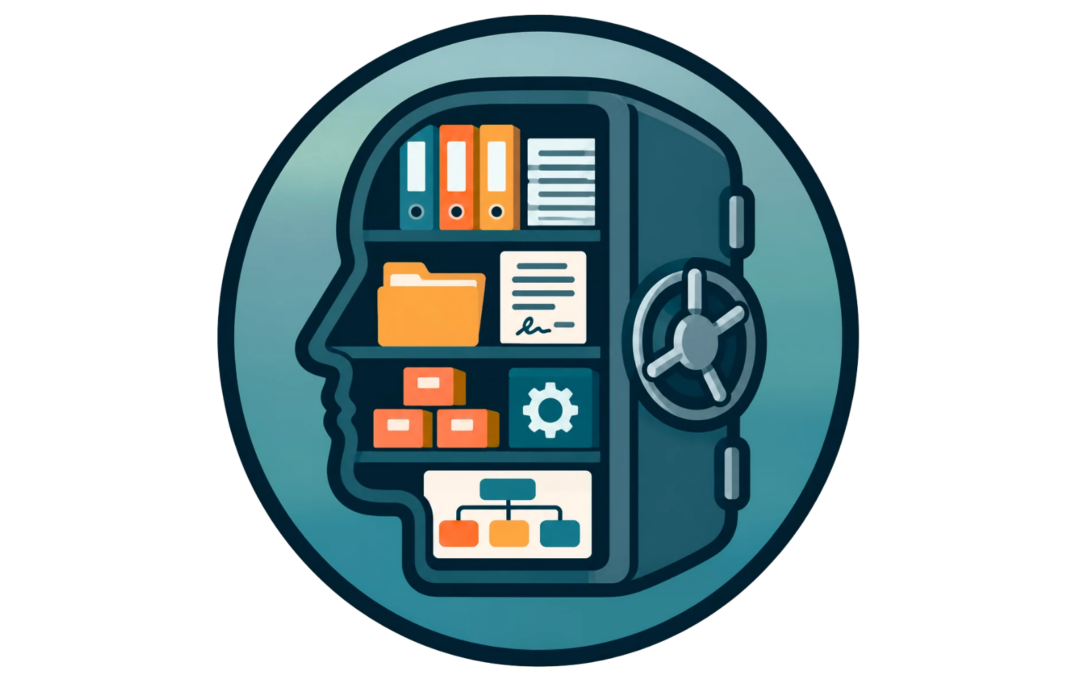
This post was written entirely by me and not by AI. The article summaries, title, and graphic may all have used AI to assist/generate ideas/edit, but the article content is fully human.