
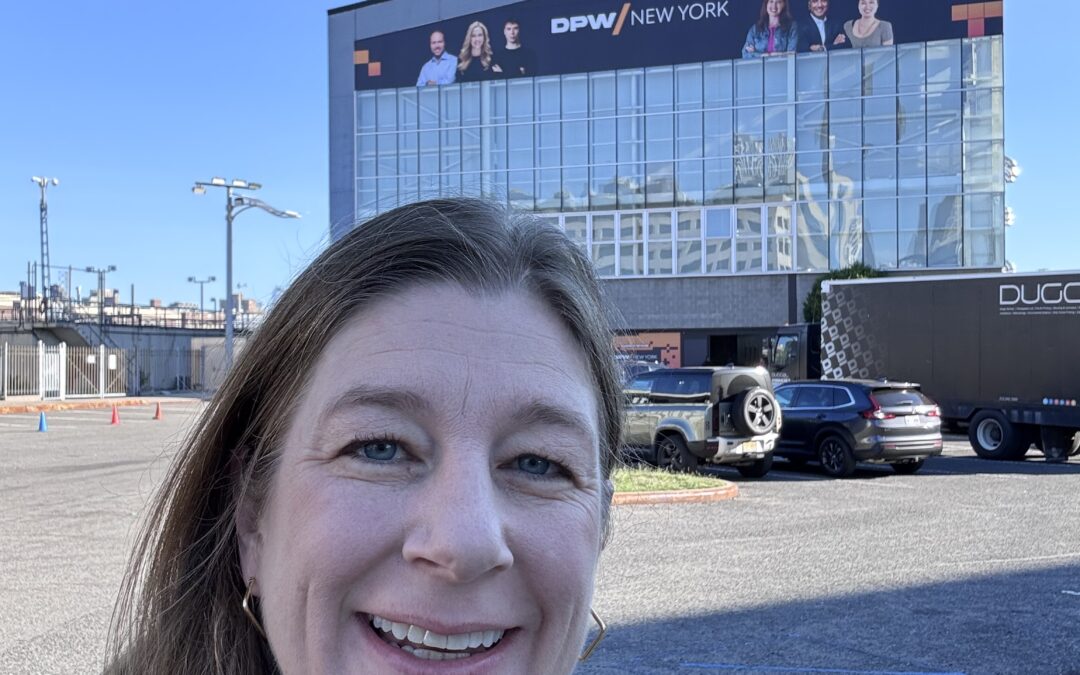
I was lucky enough to head to DPW New York last week, often considered the leading edge procurement conference. The official theme was “Recode” for 2026 with excellent speakers talking about AI in Procurement. The whole conference was a little less polished than I expected, the DPW team clearly has their Amsterdam conference figured out and are just as clearly only in their second year in New York. I was able to get to four talks, and I’m saving the last one for next week’s article because it was just so good. These concise talks covered the core of what makes the “Best” procurement organization, the red and green flags for buying AI, and how the US can compete with China. Today we’ll cover:
“Getting the Foundations Right: Recoding Procurement” with Janelle Aydin, CPO of Kraft Heinz;
“What to Look for when Buying AI Solutions” with a panel of Gary Levitan of Louis Vuitton, Jana Wayne of Hunter Point Capital, and Sandeep Bakshi of Prosus Ventures; and
“Apple in China” with NY Times Bestselling author Patrick McGee.
Next week I’ll dive into all the non-AI things companies need to do AI right with “AI is Ready. We are Not.” from Saurabh Gupta from HSF Research.
Getting the Foundations Right: Recoding Procurement at Kraft Heinz
Janelle Aydin, the Chief Procurement Officer at Kraft Heinz, has been with Kraft Heinz since early 2023 and has a very well-polished talk on transforming procurement. She started off talking about how good procurement organizations deliver productivity: cutting purchase orders, sourcing spend efficiently, and so on. The Best procurement organizations deliver more: resiliency, sustainability, risk analysis, and others. Her task is to move from a Good procurement organization to a Best organization.
In 2022, Kraft Heinz was largely decentralized, and all requests for new procurement tools by team members were met with “yes”. In order to start cleaning up the chaotic procurement tool environment and start the transformation, Ms. Aydin and Kraft Heinz followed four major steps:
- They required people to state the problem they needed solved by a tool, instead of proposing a tool. This made me think of my advice for building good scopes of work: don’t tell suppliers how to solve your problem, tell them your problem or the results you desire. Let them find the best path to success.
- They cleansed their data and clarified who owned what data going forward. They acknowledge imperfect data, but are clear on both cleaning the data and keeping it clean. The interesting thing to me here was that Ms. Aydin talked about how there was a debate over who owned supplier data. While it seems intuitive to us procurement practitioners that we own it, it’s also true that many other groups have a stake and want ownership.
- They connected everything together with a digital backbone. Ms. Aydin didn’t go into detail on this in a short 15-minute talk, but I think they did it through implementations and connections into SAP. This makes sense to me because everyone who integrates will do so with SAP, Oracle, and the other big ERP platforms. The Enterprise Resource Planning platform is already the backbone of any procurement software set, and really runs everything else.
- They clarified the procurement process. This is always exceedingly difficult and saying “we clarified the process” doesn’t cover the amount of work this takes. I often help clients fix broken processes, and truly clarifying and streamlining processes can have such a positive impact on productivity and alignment.
One distinction Kraft Heinz made was that they put their top talent on running projects. This is a critical Lean Six Sigma principle that often gets missed, with companies instead putting their “extra” talent leading projects and improvement teams. One core idea in the book The Toyota Way is that when Lean Six Sigma projects free up headcount, each team gives their best people to the talent pool to fill other positions in the organization. That way the organization is constantly strengthened by Lean activity and employees have much more buy-in for the transformation process. I suspect this principle should translate to AI programs that are instead using AI to drive layoffs (more on that in next week’s article!!).
Looking forward, Kraft Heinz’ next steps are in workflow automation, predictive risk, a connected supplier ecosystem, real-time spend visibility, and AI insights & recommendations. Ms. Aydin didn’t go into depth on any of these, and they sound a bit like a bunch of buzzwords, but we will see what comes out of them. Ms. Aydin’s last procurement transformation took about three years according to her LinkedIn, and that was at a smaller company, so it won’t surprise me if the journey is longer at Kraft Heinz.
What to Look for When Buying AI Solutions
This was my favorite talk of the three, and was a panel of Gary Levitan, CPO of Louis Vuitton, Jana Wayne from Hunter Point Capital (representing the operations side of a private investment firm), and Sandeep Bakshi from Prosus Ventures (representing the investment side of a private investment firm). Right away Sandeep asked the group if “Agentic” is even a meaningful term anymore, and the general consensus is that it’s mostly a buzzword that means different things to different groups. Gary noted that for suppliers it seems agentic means “we want you to find a problem for us to fix,” which is one of my key takeaways from this talk. Gary was saying that in the AI space, suppliers seem to be on the hunt for problems instead of telling customers what problems their solution can fix. Ms. Wayne backed this up by saying she really cared more about the outcome than the label and seemed frustrated by suppliers who couldn’t articulate their value proposition. Ms. Wayne’s role is to build profitability and value in their holdings over five years so after five years the company can be sold for a profit. That means she’s constantly looking for AI that gets clear results instead of implementing AI for AI’s sake. Sandeep added an interesting point when he said, “AI is just statistics… at scale.”
Next the panel discussed green and red flags seen in vendor pitches, and the conversation was a bit disjointed so I’m going to rearrange it for clarity. All panelists agreed on the importance of talking to a supplier’s other customers about the benefits, deployment process, adoption rates, etc. Beyond that, some red flags:
- The more aspirational the pitch, the bigger the red flag. This includes functionality that’s coming or “on the road map.” I’ve also heard this called vaporware, and I agree it’s a big red flag. It’s good to have a road map, but it’s important to judge any software supplier on what’s already built and working well.
- If it’s not clear in the first five minutes what problem the tool solves. This is a big red flag because then you’re not really buying software – you’re buying a team of developers you’re going to hope can solve your problems. Stay with suppliers who know what problem they solve and the value they bring.
- A tool that doesn’t know how to measure success. It should be clear what “good looks like” for a tool, and you should know before you start how you will know if the tool added value. My side note here: this should be true with anything procurement does. We should know what success looks like and which metrics will tell us if we’re succeeding at our goals.
- A tool that doesn’t explain how it fits into your workflow. Something can be a great tool with clear success metrics, but it still has to “fit” your organization. If you are a software services company, an inventory optimization tool might have limited usefulness. The comparison is seldom that obvious, but the issue remains: make sure the tool fits into your business and workflows.
- When it sounds too easy to deploy. Suppliers often want to give us the answer that something will be super easy to deploy, use, and adopt. They’re trying to make the sale. The truth is none of this technology is easy, and if something seems too easy, it probably is.
- When the result is too far out (five years plus). Part of this one is the panelists and their experience; the majority of their focus is on making companies more valuable in five years so they can be resold. It’s still a good point that the Return on Investment should probably hit within five years to be worth the effort and cost, especially with the speed AI is changing and evolving.
The panelists also noted some green flags in AI tools:
- Involving the end users in the process from the very beginning. Buy-in on anything is critical, and it’s important with AI tools that the buy-in is strong at every level. A deployment will fail without the technology’s users seeing and agreeing with the tool’s value.
- A great user interface (UI/UX) drives adoption and great data quality. The panel drew a very clear line between a good user interface that is easy to use and the ability to increase the tool’s use among practitioners. They also noted data stays cleaner when it’s easier to use the tool to enter and search data. Gary particularly noted that the “Quality of data is very important. Without the proper data, you almost have a useless tool.”
- Running a pilot as part of the deployment. The panel believed pilots can be great for proof of concept and helping determine how a tool fits in an organization. This is interesting because the speaker I’ll cover next week was more in the “stop doing proof of concept work in AI” space. I suspect these two groups are saying the same thing: Just doing a pilot is not actually enough.
The panel made a couple other points that don’t fit well in the rest of this summary, but are worth noting. First, Ms. Wayne had an experience with building a tool within a company instead of buying one. Her advice was not to do this because the tools available are quickly more sophisticated and better, and a company should be spending its resources on its competitive advantages. Unless a company is an AI tool company, don’t spend internal resources building custom tools that then have to be maintained.
The panel also got surprisingly specific about the use of chatbots in call centers. Apparently this is one of those applications that seems like a no-brainer, but actually has a lot of complexity (that sounds so much like MRO in e-auctions!). Before implementing a chatbot in a call center, run good numbers on how many calls that center is taking but also what percentage of those calls are truly routine vs. custom.
Apple in China
As an author myself, I found this talk fascinating and a little inspirational. My book “Transform Procurement: The Value of E-auctions” is not a New York Times Bestseller. Nor will it be; it’s too niche. Watching Patrick McGee, the author of the New York Times Bestseller “Apple in China” was really interesting and made me think about what my next book could be. But enough about me, let’s talk about Patrick’s chat.
Patrick is not anti-China, although he often gets painted that way. One of his central tenants was that Apple exploited China, but China also exploited Apple. From the birth of the iPhone to today, Apple has invested about $800 billion in China and trained approximately 30 million people in high-end electronics manufacturing. China’s competitive advantage is people, and before Apple had suppliers in China, those people were untrained in manufacturing to Apple’s exacting specifications. Now we’re at a point where China isn’t a manufacturing capital due to cost alone, they are a center of activity because China has manufacturing centers that are industrial machines. They have the people, infrastructure, and supply chains to meet cost, timing, and quality required of our modern customer expectations. I’ve seen this play out myself in recent sourcing exercises for clients. Some clients are looking to diversify their supply chains beyond China, and it’s hard to find infrastructure in other countries good enough to meet specifications.
Patrick also talked about how some of Apple’s China suppliers worked hard to put as many team members through Apple’s training as they could. The Apple team would come in Monday morning and find all of the Apple line employees had been moved to the Dell Computer line and all new faces were waiting to be trained. Suppliers quickly learned that if they could meet Apple’s exacting standards, their other customers would be thrilled by the same quality. Because of all of this, Apple was allowed to operate in China without a joint venture, which is usually required of foreign companies operating within China. Currently Tesla is the only automotive company allowed to operate in China without a joint venture, partly because of how Apple paved the way.
Last, Patrick was asked about politics and how what he learned can help the US. He noted that enacting the same policies China has used to increase manufacturing simply won’t work here because we’re too different. China’s competitive advantage is people. The US’s competitive advantage is that we have alliances with many countries around the world. China’s only formal ally is North Korea, with some friendly ties to Russia and Iran. He was much more in favor of friend-shoring our manufacturing with allied countries than trying to get manufacturing built back up here. It will take a long time to get manufacturing rebuilt outside of China. He was dismayed by the “America First” approach currently in use by the US administration because he viewed it as directly against our competitive advantage. He noted that the government of China can think very long term with one leader for dozens of years and one party in power. It’s very hard for the US to think long term when our election cycle is every two years.
Come back next week for the discussion on “AI is Ready. We are Not.” with Saurabh Gupta. His articulation on what companies need to do to implement AI is just so. dead. on.
If you’d like to talk about conferences (supply chain or otherwise) or anything else, let’s chat. If you’d like to get these articles weekly straight to your inbox and never miss one, sign up for my newsletter.
My book, Transform Procurement: The Value of E-auctions is available in ebook, paperback and even hardcover format: https://www.amazon.com/dp/B0F79T6F25
My chapter in the powerful anthology Femme Led: Hard-Learned Lessons from Women in Leadership is now available in ebook and paperback format: https://a.co/d/0bOzma8F